


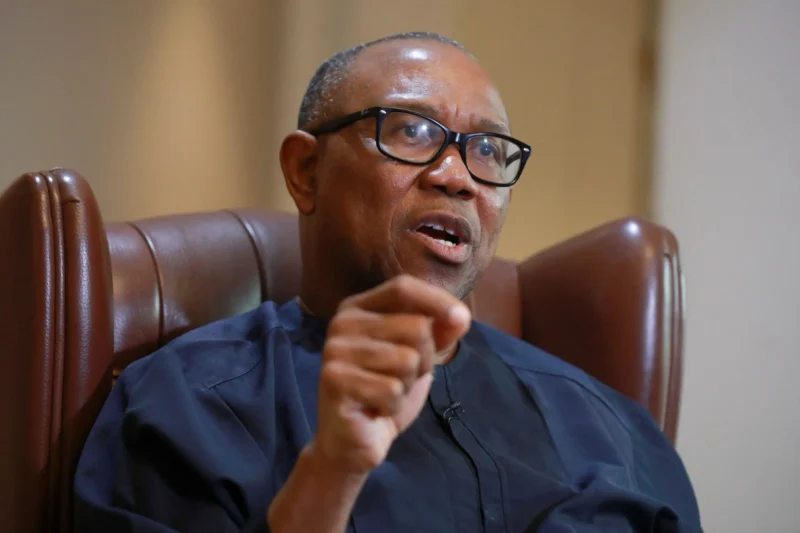
Former presidential candidate Peter Obi has issued an emotional and wide-ranging statement explaining his decision to exit the African Democratic Congress (ADC), pointing accusing fingers at the Nigerian state and its agents for orchestrating instability within opposition political spaces.
In a reflective Sunday morning post addressed to Nigerians, Obi described the current political environment as “increasingly toxic,” where intimidation, insecurity, and deliberate division have replaced genuine service and nation-building.
The former Anambra governor was careful to distance his departure from any personal fallout with ADC leadership, stating clearly that neither the party’s Chairman, Senator David Mark, nor former Vice President Alhaji Atiku Abubakar, were responsible for his exit. “I will continue to respect them,” he wrote.
At the heart of his statement, however, is a serious allegation — that the same forces he believes disrupted the Labour Party from within are now penetrating the ADC, bringing with them a trail of court cases, internal battles, suspicion, and division. He described the pattern as politics built on “control and exclusion rather than service and nation-building.”
In perhaps the most personal section of the statement, Obi described the quiet pain of feeling unwelcome even in spaces where he had laboured sincerely — feeling, he said, like “an outsider in one’s own home.” He lamented that associates who publicly identified with him privately distanced themselves, with some even joining in unfair criticism. He also pushed back against narratives painting him as weak or stingy, arguing that humility should not be mistaken for weakness, and that prudent management of resources — particularly in education and healthcare — deserved appreciation, not ridicule.
In a pointed rebuttal to political speculation surrounding his next move, Obi declared he harbours no desperation for the nation’s highest offices. “I am not desperate to be President, Vice President, or Senate President,” he wrote. “I am desperate to see a society that can console a mother whose child has been kidnapped or killed. I am desperate to see a Nigeria where people will not live in IDP camps but in their homes.”
Despite his frustrations, Obi ended on a note of defiance and hope, insisting his faith in Nigeria’s potential remains unshaken. “I firmly believe that Nigeria can still become a country with competent leadership based on justice, compassion, and equal opportunity for all,” he concluded.
Obi’s latest exit raises fresh questions about the future of Nigeria’s opposition space and his own political trajectory ahead of the 2027 general elections. As Nigerians digest his heartfelt statement, his next political move remains eagerly awaited, with many watching closely to see which direction the man who reshaped Nigeria’s political conversation in 2023 will turn next.