


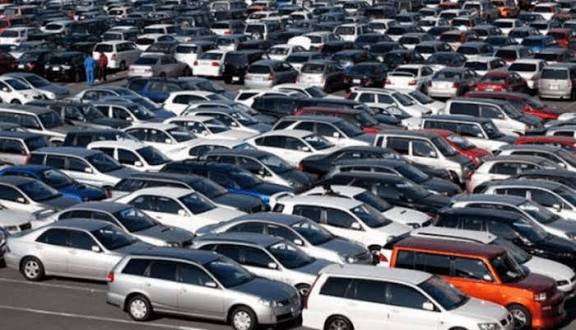
The Federal Government has intensified efforts to curb the influx of imported used vehicles into Nigeria, citing concerns over road safety, environmental protection, and the need to strengthen local vehicle assembly.
This was disclosed by Joseph Osanipin, Director-General of the National Automotive Design and Development Council (NADDC), during the 18th Nigeria Auto Journalists Association (NAJA) International Auto Awards.
According to Osanipin, the government will begin full implementation of the End-of-Life Vehicle (ELV) policy in 2026, a move aimed at removing unsafe and unroadworthy vehicles from Nigerian roads while restricting the importation of substandard used cars.
Full Enforcement of ELV Policy Begins Next Year
Osanipin explained that the ELV policy targets vehicles that have reached the end of their useful life due to age, damage, or mechanical failure. Such vehicles will no longer be allowed on Nigerian roads or permitted for importation once the policy takes full effect.
He said the NADDC has already launched the policy and is finalising operational procedures for ELV recycling regulations, adding that full enforcement is expected by the second quarter of 2026.
“Vehicles that are not supposed to be on the road will no longer be on the road, and they will also not be allowed to come into Nigeria,” Osanipin said, noting that relevant government agencies are being aligned to ensure effective enforcement.
Automotive Policy Heads to National Assembly
The NADDC boss also revealed that the Federal Government is set to push Nigeria’s long-awaited National Automotive Policy to the National Assembly for legislative approval.
He stated that consultations with lawmakers have already begun and that public hearings will be held to fast-track the process. According to him, the policy is expected to be passed within the first half of the year.
As part of the reforms, Osanipin said the government will introduce stricter import regulations for used vehicles, ensuring that only vehicles that have been properly tested, accredited, and certified to meet international standards are allowed into the country.
Vehicles that fail these standards, he added, will be barred from importation, with the measures being implemented gradually to reduce the influx of substandard automobiles.
Boost for Safety and Local Assembly
Osanipin noted that the reforms are designed not only to improve road safety and protect consumers but also to encourage local vehicle assembly and job creation within Nigeria’s automotive sector.
He stressed that the ELV policy and the proposed automotive law are complementary initiatives aimed at strengthening the industry and reducing Nigeria’s dependence on used vehicle imports.
Commending NAJA, Osanipin said the association’s annual auto awards have remained a vital platform for industry stakeholders and a catalyst for growth and innovation in the automotive sector.