



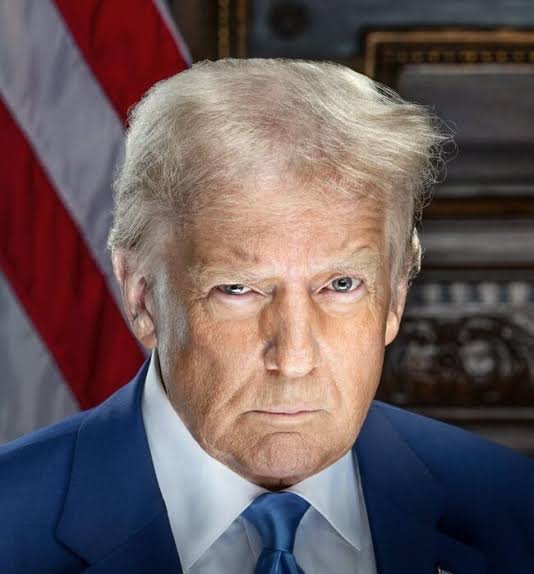
U.S President Donald Trump has announced expanded entry restrictions on foreign nationals from 24 countries, citing concerns over deficiencies in screening, vetting, and information-sharing that threaten U.S. national security and public safety.
The announcement, published on the White House website, imposes full suspensions on eight countries and partial suspensions on 16 others, affecting immigrants and nonimmigrants on B-1, B-2, B-1/B-2, F, M, and J visas. The administration stated that the move is necessary to prevent the entry of foreign nationals about whom the United States lacks sufficient information to assess the risks they pose.
Countries facing full suspension include Burkina Faso, Laos, Mali, Niger, Sierra Leone, South Sudan, Syria, and the Palestinian Authority. These restrictions are justified by factors such as terrorist activities, high visa overstay rates, and historical refusal to accept back removable nationals.
Nigeria is among the countries facing partial suspension, along with Angola, Antigua and Barbuda, Benin, Cote d’Ivoire, Dominica, Gabon, The Gambia, Malawi, Mauritania, Senegal, Tanzania, Tonga, Turkmenistan, Zambia, and Zimbabwe. The justification for Nigeria’s partial suspension is the presence of radical Islamic terrorist groups like Boko Haram and the Islamic State, which create substantial screening and vetting difficulties. Nigeria has a B-1/B-2 visa overstay rate of 5.56 percent and an F, M, and J visa overstay rate of 11.90 percent.
The article also references a June executive order from President Trump classifying 19 countries as “of Identified Concern,” which banned entry for nearly all nationals from 12 countries, including Afghanistan. Additionally, it mentions a proposal from Secretary of State Marco Rubio that could impose visa restrictions or entry bans on up to 36 additional nations.
Full bans generally bar citizens of specified countries from entering the U.S. and block the issuance of most new immigrant and non-immigrant visas, with exceptions for lawful permanent residents, diplomats, or specific exempt categories. Partial restrictions limit or suspend certain classes of visas, impose stricter vetting, and often require more rigorous screening before entry.
On December 16, 2025, President Donald Trump broadened the scope of U.S. travel restrictions, adding 24 countries to the list of those facing either full or partial bans. This action was taken due to concerns about security, screening procedures, and information sharing.
Key points include:
Full travel bans on eight countries such as Burkina Faso and Syria
Partial travel bans on Nigeria and 16 other countries
Justification for Nigeria’s inclusion due to terrorist groups
Visa types affected include B-1, B-2, F, M, and J visas
Exceptions exist for lawful permanent residents and certain visa holders
Broader context reflects tightening immigration policies
Reasoning emphasizes the need for stricter vetting
Effective date for the new travel ban is January 1, 2026
Other actions include reviewing immigration status of permanent residents from Afghanistan and 18 additional countries
The expanded restrictions reflect the U.S. government’s concerns about security and the need for stricter vetting processes.


