


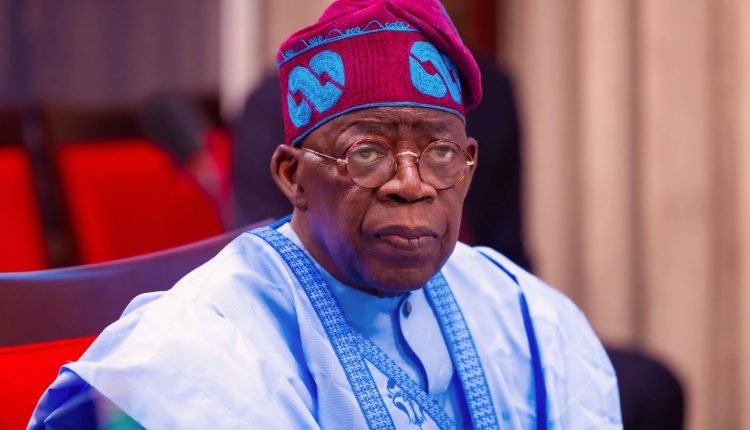
President Bola Tinubu has announced that his administration is engaging diplomatically with the world following U.S. President Donald Trump’s recent threats of military action against terrorist groups in Nigeria, in response to alleged mass killings of Christians. This comes as a coalition of northern elders has rejected calls from U.S. lawmakers to ban Sharia law in the country.
During a Federal Executive Council meeting, Tinubu reassured Nigerians that the government is committed to defeating terrorism and ensuring security across the nation. He highlighted the ongoing economic reforms that are aimed at fostering stability and prosperity.
“The most important thing is that despite political challenges and public fears, we will continue our diplomatic engagement,” Tinubu stated. He referenced the successful oversubscription of a recent $2.3 billion eurobond as a sign of confidence in Nigeria’s economic trajectory.
Trump’s comments, which included labeling Nigeria a “Country of Particular Concern” and threatening military intervention, have drawn mixed reactions. The Minister of Information, Mohammed Idris, emphasized that the Nigerian government is responding calmly and strategically, prioritizing the protection of all citizens.
Idris insisted that the government prefers diplomatic resolutions over escalating tensions and highlighted that Nigeria is a pluralistic society where religious freedom is constitutionally protected.
In response to Trump’s threats, several northern groups, including the Northern Elders Forum, have condemned the proposed sanctions against Sharia law, asserting that such actions threaten the region’s Islamic identity. They argue that Sharia law is integral to the cultural and religious fabric of northern Nigeria.
Islamic clerics from the South-West have called for respect for Nigeria’s sovereignty, urging international bodies to avoid interference that could destabilize the country. They emphasized the importance of internal peace efforts without external pressure.
Meanwhile, civil society groups have protested against Trump’s threats, labeling them reckless and detrimental to Nigeria’s stability. They argue that the security challenges in Nigeria are complex and rooted in broader issues of extremism and governance, rather than religious persecution.
On the diplomatic front, Nigeria’s government has opened channels with U.S. officials to address the situation, insisting on a responsible and balanced response to the security issues at hand. The administration remains committed to partnerships with international communities to combat terrorism.